BACK
Progrecity - Designing a community-driven marketplace connecting people with local businesses
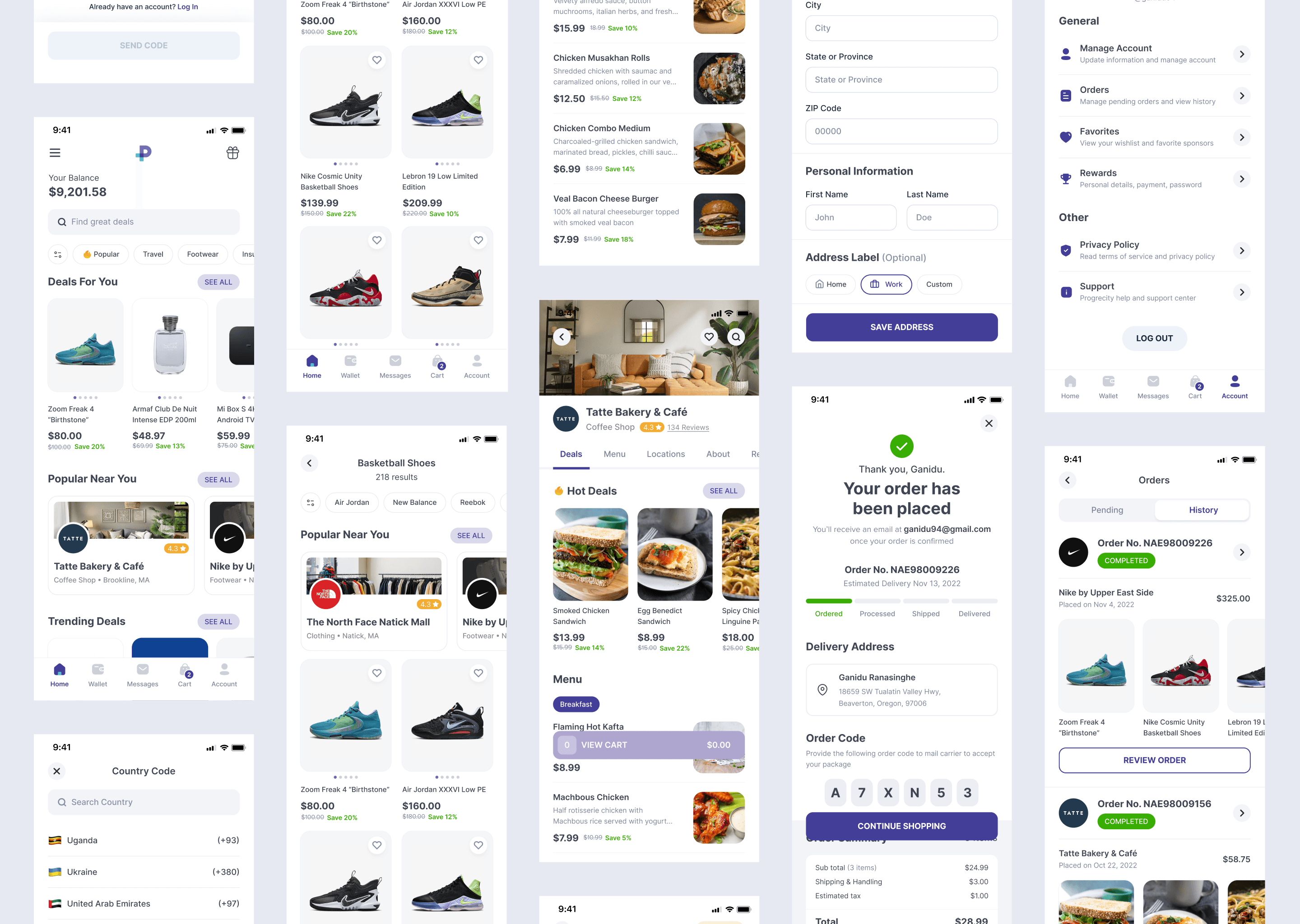
Walk through almost any neighborhood and you’ll find dozens of small businesses, cafés, salons, bakeries, restaurants, repair shops. Many of them offer great products and services. But online, they’re surprisingly hard to find. Consumers usually rely on a handful of large platforms to discover places nearby. Meanwhile, many local businesses struggle to stand out or attract new customers digitally. The result is a gap.
Great local businesses exist.Customers are nearby.But the connection between them is weak.
Progrecity was designed to bridge that gap. The goal was to create a platform that helps people discover local deals while giving small businesses a simple way to promote their offerings and manage incoming orders. Instead of simply listing businesses, Progrecity focuses on actionable offers — helping people discover nearby experiences and giving businesses a practical tool to attract customers.
Project Overview
Product
Progrecity - a local commerce marketplace connecting consumers with nearby businesses.
My Role
Product Designer
Outcome
Designed an MVP platform enabling deal discovery for consumers and operational tools for businesses.
Timeline
3 Months
Full Project
The Real Problem
At first glance, the problem seemed simple. Local businesses need better visibility. But once we explored the space further, it became clear that the challenge was deeper. The problem existed on both sides of the marketplace.
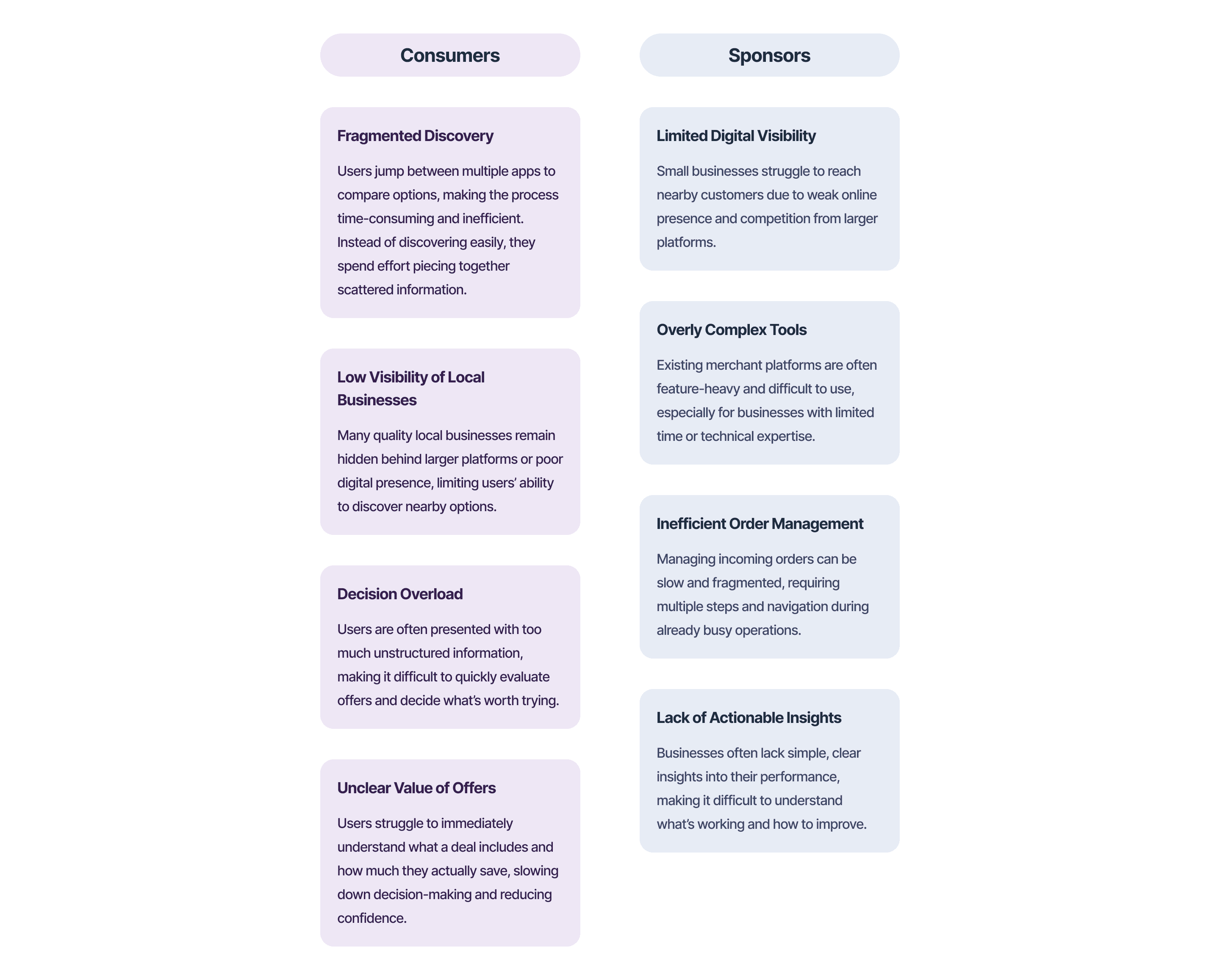
Consumers struggled with discovery
People enjoy discovering new places nearby — restaurants, services, and experiences. But discovery is often fragmented. Users jump between multiple apps trying to compare options, read reviews, and understand whether a place is worth trying. Even when good businesses exist nearby, they can remain hidden behind larger platforms or scattered information.
Businesses struggled with digital tools
Small business owners already manage many responsibilities — operations, staff, inventory, and customers. Most digital platforms are built with complex tools and dashboards that are difficult for smaller operators to adopt. What many businesses really need is much simpler:
A way to promote dealsA way to attract local customersA way to manage orders quickly
The Core Insight
The real challenge wasn’t just discovery. It was designing a system where discovery, purchase, and fulfillment work together smoothly. Consumers needed a better way to explore nearby deals. Businesses needed tools that were simple enough to use during real day-to-day operations. Progrecity needed to support both sides of the marketplace at the same time.
The Opportunity
Progrecity was designed as a community-focused marketplace connecting people with local businesses through discounted offers. Businesses could create deals on their products or services, while users could discover and purchase those deals through the platform. This creates value for both sides.
For consumers
Discover new local businessesSave money through discountsExplore experiences nearby
For businesses
Increase local visibilityAttract new customersDrive more transactions
Research & Discovery
To better understand the space, I began with competitive research and early user validation. The goal was to understand how existing platforms operate and where there were opportunities to improve the experience.
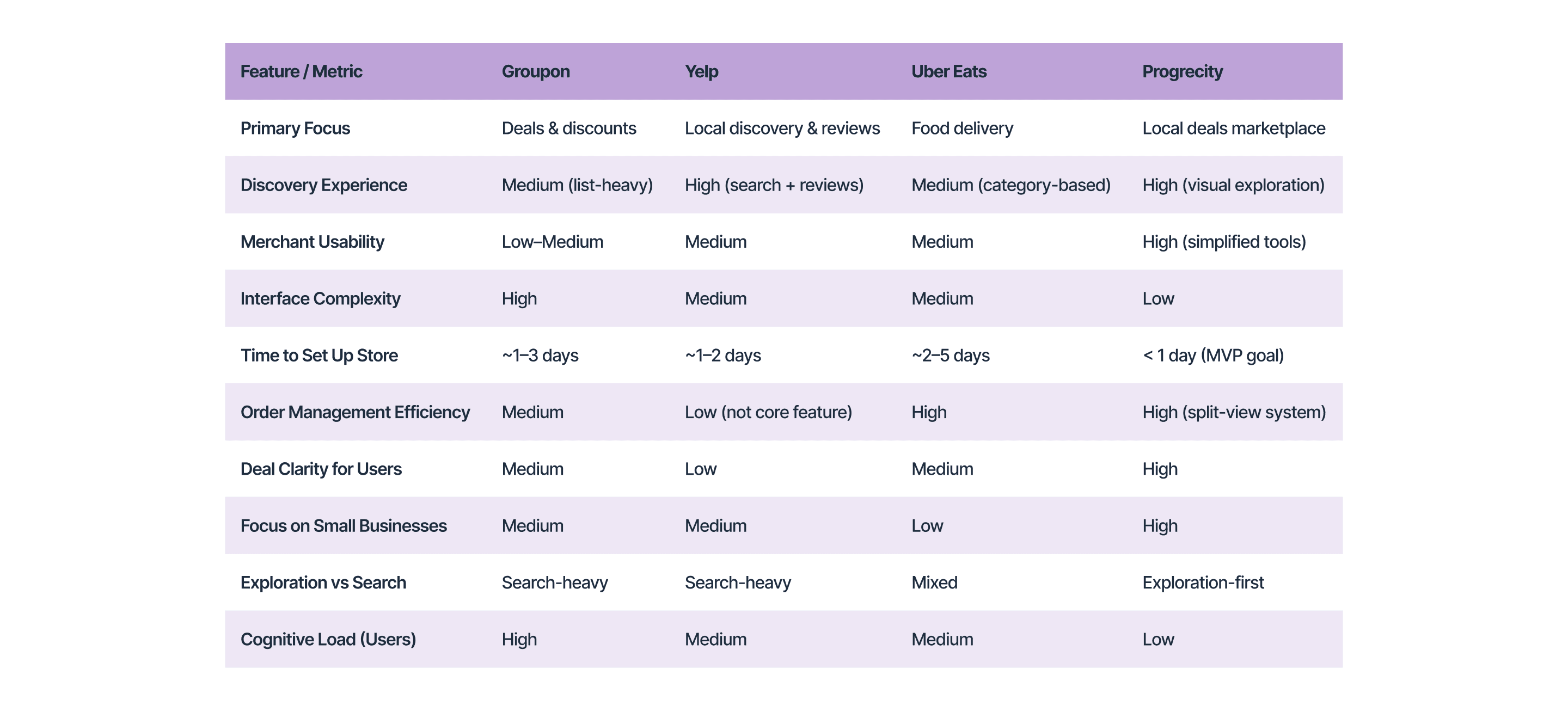
Competitive Analysis
I analyzed several platforms that operate in the local deals and marketplace space. Examples included deal platforms and local discovery apps that connect users with businesses. Several patterns quickly emerged. Most platforms focused heavily on listing deals, but less attention was given to merchant usability. Many merchant dashboards felt complex and overloaded with features. At the same time, consumer experiences often felt cluttered, making discovery harder than it needed to be.
This revealed an opportunity. If Progrecity could deliver:
Clean discovery for usersSimple operational tools for businesses
it could create a much smoother marketplace experience.
Usability Testing
Early prototypes were tested with potential users to validate assumptions and refine the experience. The sessions helped reveal a few important insights. Users preferred visual discovery of deals rather than long lists of businesses. They wanted to quickly scan offers and understand the value without reading too much information. For business owners, speed was critical. During busy hours, they needed to process orders quickly without navigating complex interfaces. These insights influenced many of the design decisions throughout the product.
MVP Constraints
The project timeline was three months, which meant the product needed a clearly defined MVP scope. Instead of building a large set of features, the focus was on enabling the core marketplace loop:
Businesses creating dealsUsers discovering themUsers purchasing offersBusinesses managing orders
Everything in the design was guided by this principle.
Designing the Marketplace Experience
The member experience focuses on helping users discover and purchase local deals effortlessly.
Unlike traditional e-commerce platforms, Progrecity is centered around exploration and discovery rather than direct product search. Users typically open the app without knowing exactly what they want — they are looking for inspiration and nearby experiences.
Because of this behavior, the experience needed to encourage quick scanning, visual discovery, and confident decision making.
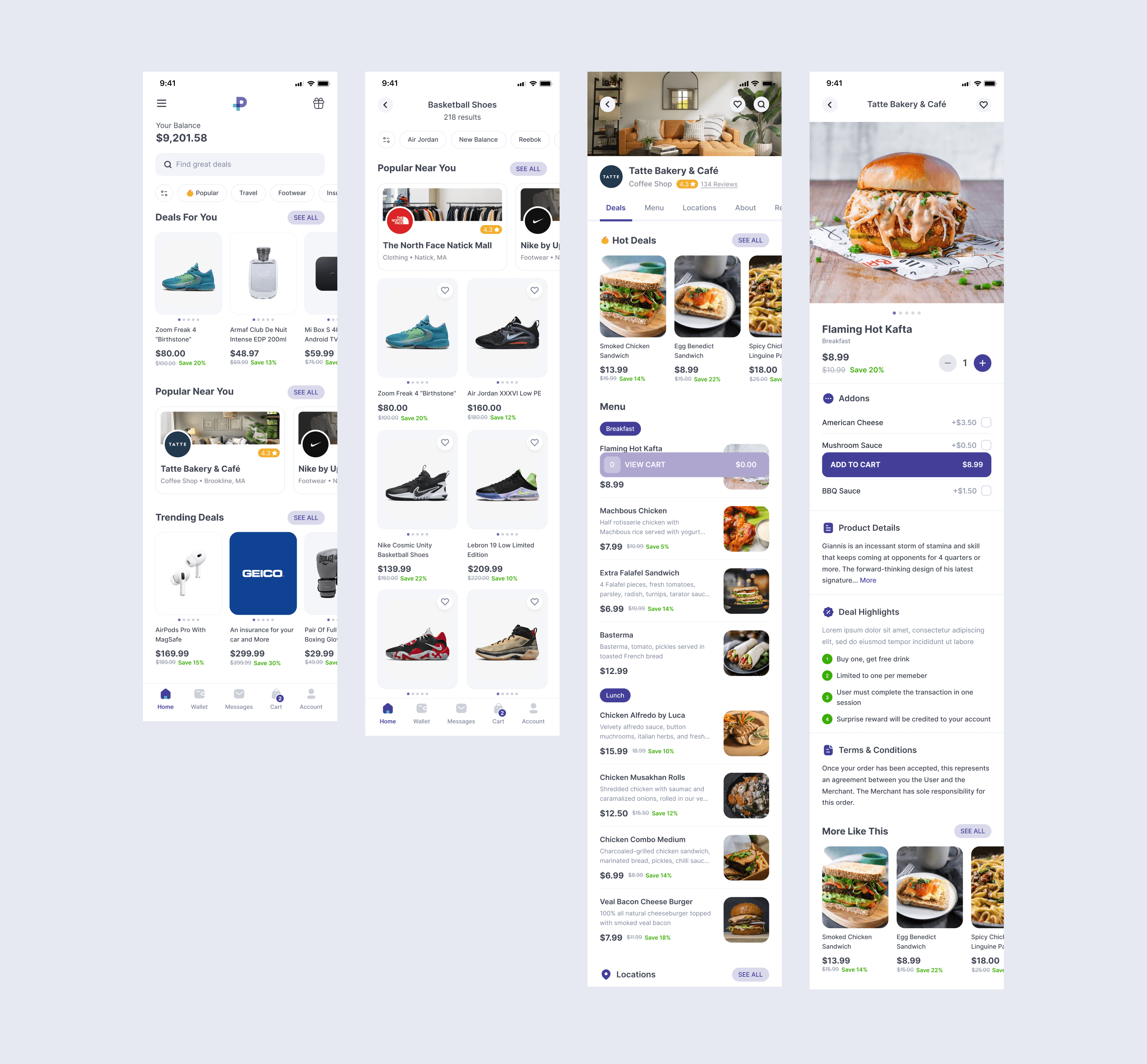
Making Local Deals Easy to Explore
One of the key design goals was to make deals easy to explore at a glance. Users should be able to quickly understand the value of an offer without needing to open multiple screens. To support this, deals are presented through visual cards that highlight the most important information:
the business offering the dealthe discount valuethe product or experiencevisual imagery
This format allows users to quickly scan multiple offers and decide which ones are worth exploring further. The interface encourages browsing while keeping the experience simple and visually engaging.
Helping Users Decide Quickly
Once users find a deal that interests them, the next step is helping them decide whether to purchase. Instead of overwhelming users with too much information, the design focuses on answering a few essential questions quickly:
What exactly is the offer?How much can I save?Who is the business behind it?
Providing clear information builds confidence and helps users move forward without hesitation. The layout keeps the most important details visible while avoiding unnecessary complexity.
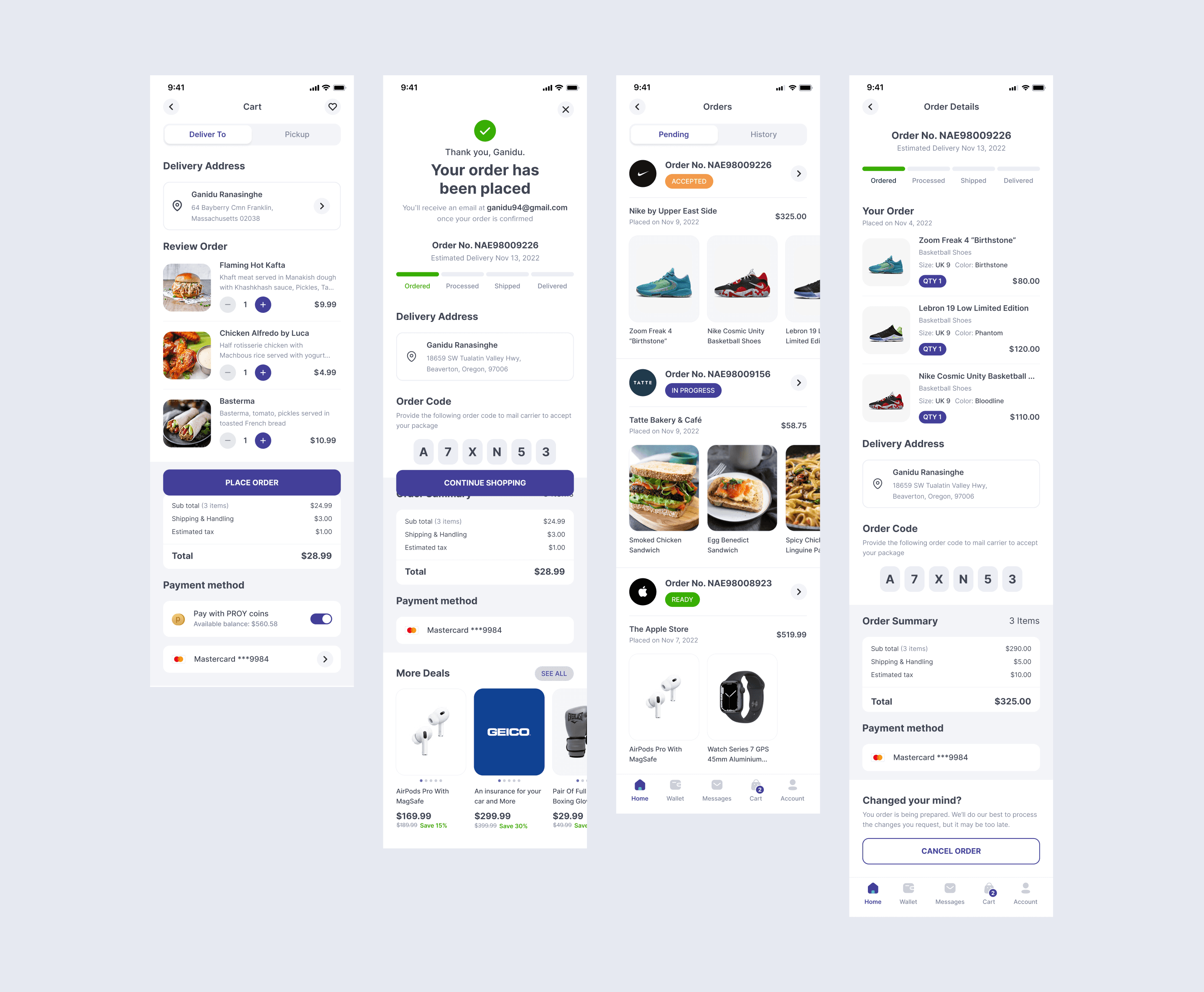
Reducing Friction in the Purchase Flow
Once a user decides to purchase a deal, the process should feel quick and straightforward. A complicated checkout flow can interrupt the momentum created during discovery, so the design focuses on minimizing friction. The purchase flow keeps the experience simple:
Users can review their selected dealConfirm pricing clearlyComplete the purchase in just a few steps
The goal is to maintain the sense of progress from discovery to purchase without introducing unnecessary steps.
Designing for Trust
Another important consideration was trust. When users try a new local business, they often want reassurance that the experience will be worthwhile. The design therefore emphasizes clear business information, recognizable branding, and transparent pricing so users can feel confident in their decision. This helps transform a simple discount offer into a trusted local experience.
Designing the Sponsor Experience
While the member experience focuses on discovery, the sponsor experience focuses on operations. Local businesses often operate in fast-paced environments where time is limited and digital tools must be simple to use. Many existing platforms provide powerful merchant dashboards, but they can be overwhelming for smaller businesses that only need a few essential capabilities.
For Progrecity, the goal was to design a sponsor experience that feels approachable, efficient, and practical for real day-to-day business operations. Business owners needed to be able to:
Set up their store quicklyCreate and manage dealsProcess incoming orders efficientlyUnderstand how their store is performing
Instead of building a complex merchant system, the design focused on simplicity and operational clarity.
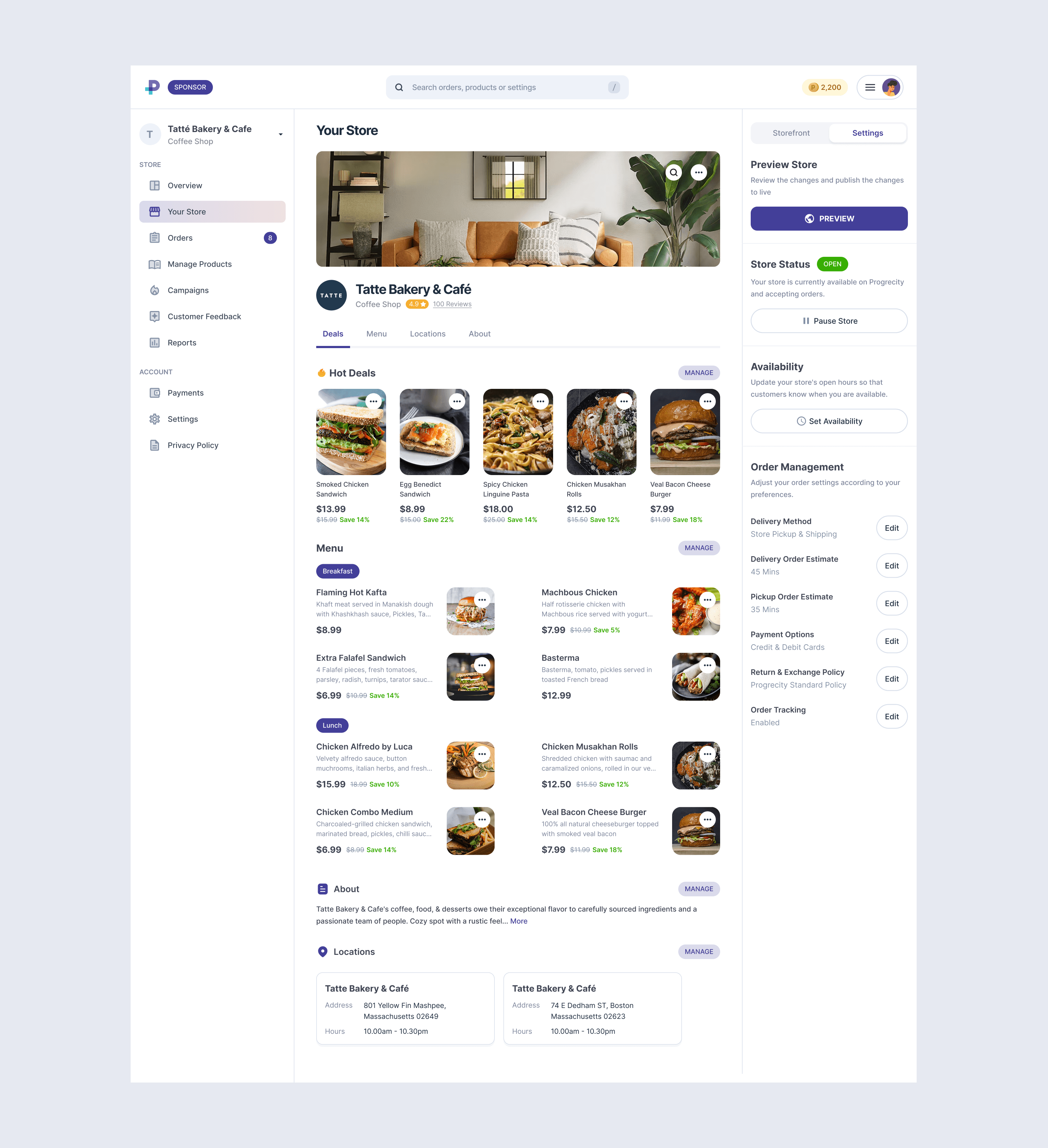
Helping Businesses Get Started Quickly
For many small business owners, the first interaction with a digital platform can feel intimidating. A complicated onboarding process can discourage businesses from completing setup and listing their products.
Because of this, the sponsor onboarding experience was designed to minimize friction and help businesses get started quickly.
The setup flow guides businesses through a few essential steps:
Selecting their business typeCreating their store profileAdding their first products or servicesApplying discounts to create deals
The goal was to ensure that businesses could start offering deals with minimal setup effort. By keeping the onboarding focused and straightforward, sponsors can move from registration to a live storefront without feeling overwhelmed.
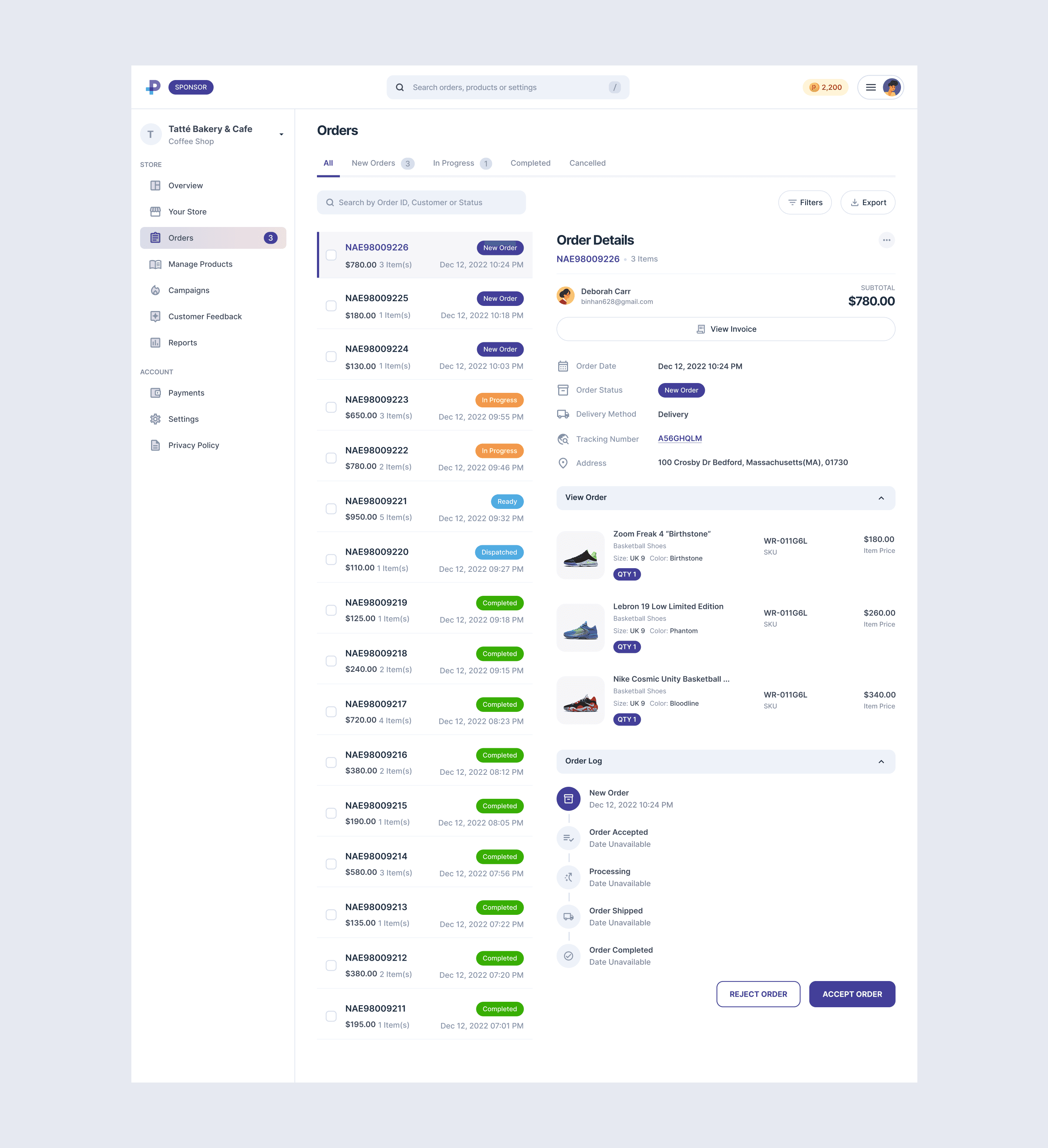
Designing for Fast Order Management
Order management is one of the most critical aspects of the sponsor experience. During busy periods, businesses need to quickly review incoming orders and update their status without navigating multiple screens. To support this workflow, the orders interface was designed using a split-view layout.
Orders appear in a list on the left side of the interface, while the selected order details are displayed on the right. This layout allows sponsors to quickly scan incoming orders while simultaneously viewing the full details of a selected order. The design enables businesses to:
Review multiple orders quicklyAccess order details instantlyUpdate order statuses with minimal navigation
By reducing the number of steps required to manage orders, the interface supports the fast-paced nature of small business operations.
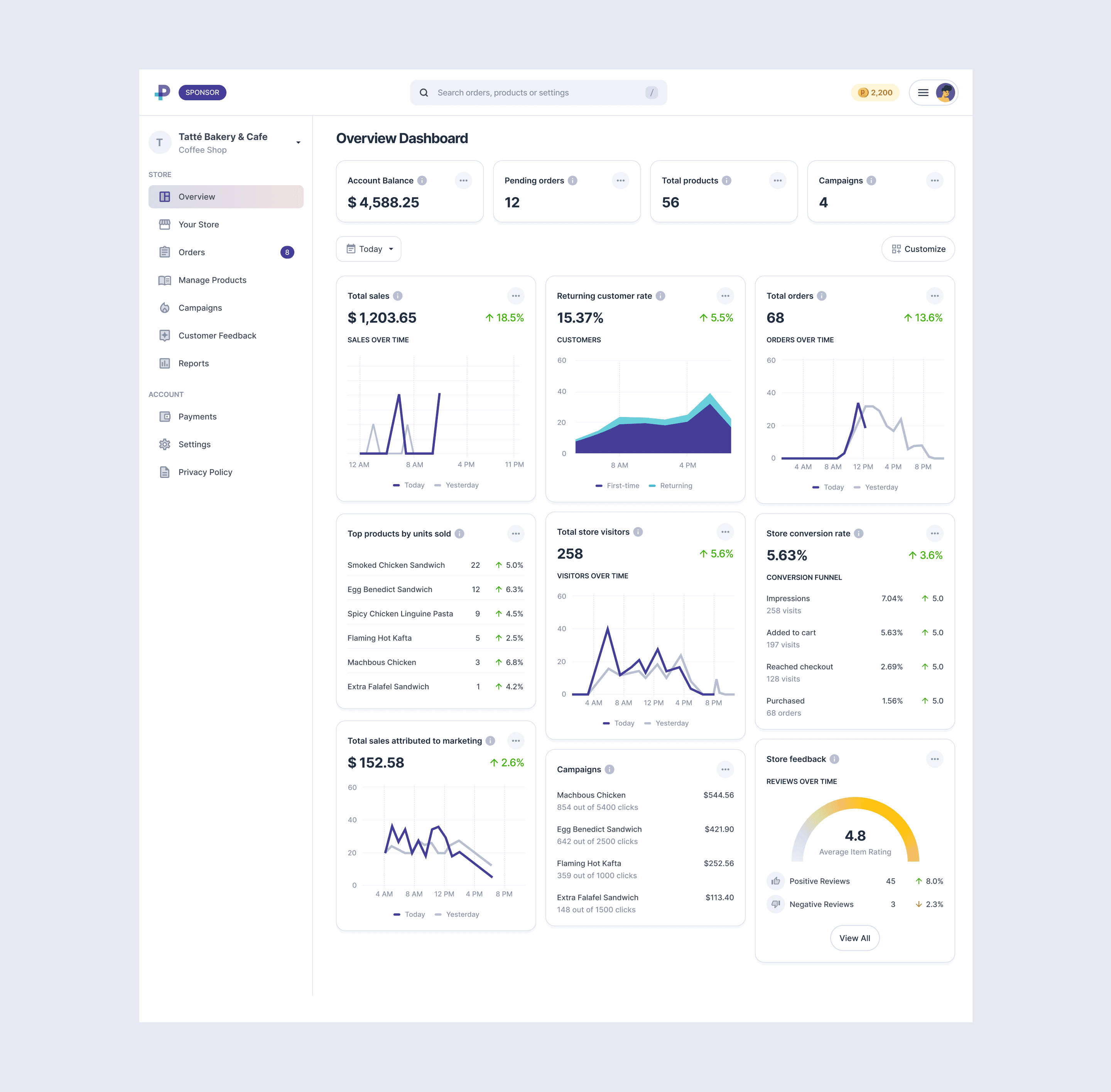
Providing Simple Performance Insights
In addition to managing orders, sponsors also need visibility into how their business is performing on the platform. However, many analytics dashboards overwhelm users with excessive data and complex charts. For Progrecity, the goal was to provide decision-ready insights rather than detailed analytics. The sponsor dashboard highlights a few key metrics that matter most to business owners:
Total salesNumber of ordersVisitors to the storeConversion rateRepeat customersTop-performing products
These metrics give sponsors a quick snapshot of how their storefront is performing. Instead of requiring businesses to analyze large amounts of data, the dashboard helps them quickly understand whether their deals are attracting customers and generating sales.
Key Design Decisions
Designing Progrecity involved more than creating screens. The product needed to support a two-sided marketplace where both consumers and businesses could interact smoothly. Throughout the project, several key design decisions shaped the experience and helped ensure the platform remained simple, usable, and aligned with the goals of the MVP.
Designing for Exploration Instead of Search
Many traditional commerce platforms are built around search. Users typically know what they are looking for and use search to find a specific product. However, during early research and usability testing, it became clear that Progrecity users behaved differently. Most users opened the platform without a specific product in mind. Instead, they were interested in exploring nearby experiences and discovering new businesses. Because of this, the experience was designed around exploration rather than search. Deal cards allow users to quickly scan offers and understand the value of each deal at a glance. This encourages browsing behavior and helps users discover businesses they might not have actively searched for. By prioritizing visual discovery, the platform makes it easier for users to explore and engage with local offers.
Balancing Two Very Different User Needs
One of the biggest challenges in designing Progrecity was balancing the needs of two very different audiences. Members primarily interact with the platform for discovery and purchasing. Their experience should feel engaging, intuitive, and visually appealing. Sponsors, on the other hand, interact with the platform to manage their business operations. Their experience needs to prioritize speed, clarity, and efficiency. Designing both experiences required careful consideration to ensure neither side of the marketplace felt neglected. For example, the member interface focuses on visual deal discovery, while the sponsor interface prioritizes operational clarity and task efficiency. By designing both sides intentionally, the platform supports a healthy marketplace dynamic where discovery and fulfillment work together.
Simplifying Merchant Tools
Many existing merchant dashboards include large numbers of features and configuration options. While powerful, these systems can feel overwhelming for small businesses.
Because Progrecity targets local businesses that may not have extensive digital experience, the sponsor dashboard was intentionally simplified. Instead of building a complex analytics or management system, the design focuses on the few actions that matter most to sponsors:
Creating and managing dealsProcessing ordersUnderstanding store performance
This approach helps reduce cognitive load and ensures that businesses can use the platform without needing extensive training.
Designing Order Management for Speed
Processing orders is one of the most frequent tasks for sponsors using the platform. During busy periods, businesses need to review orders quickly and update their status without unnecessary navigation. To support this workflow, the orders interface was designed with a split-view layout. The order list appears on one side of the interface, while the details of the selected order appear alongside it. This allows sponsors to quickly move between orders while maintaining visibility of important details. The layout reduces the need to switch between pages and helps businesses process orders more efficiently.
Maintaining MVP Focus
Because the project timeline was limited to three months, it was important to keep the scope focused on the core marketplace experience. Instead of building a wide range of advanced features, the product focused on enabling the essential marketplace loop:
Businesses create dealsUsers discover offersUsers purchase dealsBusinesses manage and fulfill orders
By prioritizing this core cycle, the design ensures that the platform delivers meaningful value while remaining achievable within the MVP timeline.
Iteration Through Usability Testing
While early designs helped establish the structure of the platform, usability testing played an important role in refining the experience.
Testing sessions were conducted with potential users to observe how people interacted with the product and to identify areas that needed improvement. These sessions included both the member experience and the sponsor experience.
The goal was not only to validate the overall concept but also to understand where users hesitated, misunderstood information, or experienced friction in the interface.
Improving Deal Clarity for Members
During early testing, some users struggled to quickly understand the value of certain deals. While the deal cards displayed the product and discount, users sometimes needed an extra moment to understand what exactly was being offered.
Based on this feedback, the visual hierarchy of deal cards was refined to emphasize the most important information. Discount values and product descriptions were made more prominent so users could quickly evaluate the value of an offer while browsing. This adjustment made it easier for users to scan deals and decide which ones were worth exploring further.
Simplifying the Sponsor Workflow
Testing with sponsor flows revealed another important insight. Business owners preferred interfaces that allowed them to complete tasks quickly without navigating multiple screens. In early iterations, some actions required additional navigation steps, which slowed down common workflows such as reviewing orders.
To address this, the order management interface was refined with a split-view layout that allowed sponsors to view order lists and order details simultaneously. This change significantly improved efficiency when processing multiple orders.
Reducing Cognitive Load
Another theme that emerged during testing was cognitive load. Both members and sponsors benefited from interfaces that presented only the most essential information at each step. Several UI elements were simplified, and unnecessary details were removed to make interactions clearer and faster. These iterations helped ensure that the platform remained easy to use even for users who were not highly familiar with digital tools.
Outcome
At the end of the three-month design cycle, Progrecity was developed into a complete MVP-ready product experience. The final design delivered a fully connected marketplace flow that supports both consumers and local businesses.
Key deliverables included:
Complete member discovery and purchasing flowsSponsor onboarding and store setup experienceProduct and deal management tools for businessesOrder management and fulfillment workflowsA sponsor dashboard with performance insights
High-fidelity prototypes were created to demonstrate the full end-to-end experience of the platform. These prototypes helped stakeholders visualize how the marketplace would function in practice and provided a clear foundation for future development. By focusing on simplicity and usability, the design ensures that both members and sponsors can interact with the platform easily while supporting the core marketplace loop.
Reflection
Designing Progrecity provided valuable insights into the challenges of building a two-sided marketplace. One of the most important lessons from this project was the importance of balancing two very different user needs.
Consumers want engaging and visually appealing experiences that help them discover new opportunities. Businesses, on the other hand, need practical tools that help them manage operations quickly and efficiently. Designing a product that supports both groups requires careful prioritization and a clear focus on simplicity.
Another key takeaway was the value of maintaining strong MVP discipline.
With a limited timeline, it was important to focus only on the features that directly supported the core marketplace cycle. This helped ensure that the product remained achievable while still delivering meaningful value. Finally, the project reinforced the importance of iteration. Usability testing revealed several opportunities to refine the experience, and small improvements to visual hierarchy, workflows, and information clarity helped create a smoother overall product.
Progrecity demonstrates how thoughtful product design can help strengthen the connection between communities and local businesses. By making discovery easier for consumers and operations simpler for businesses, the platform creates a foundation for more accessible and sustainable local commerce.